
Pipes and Conduits
Exposed utility lines can hold layered dust and greasy residue. High dusting removes loose buildup with tools selected for the surface and working height.
Serving New Orleans, Louisiana & surrounding areas
Mon–Fri 8am–6pm · Sat 9am–2pm
Remove grease, grime, and hard-to-reach overhead buildup with a cleaning plan built around your kitchen, access needs, and operating schedule.
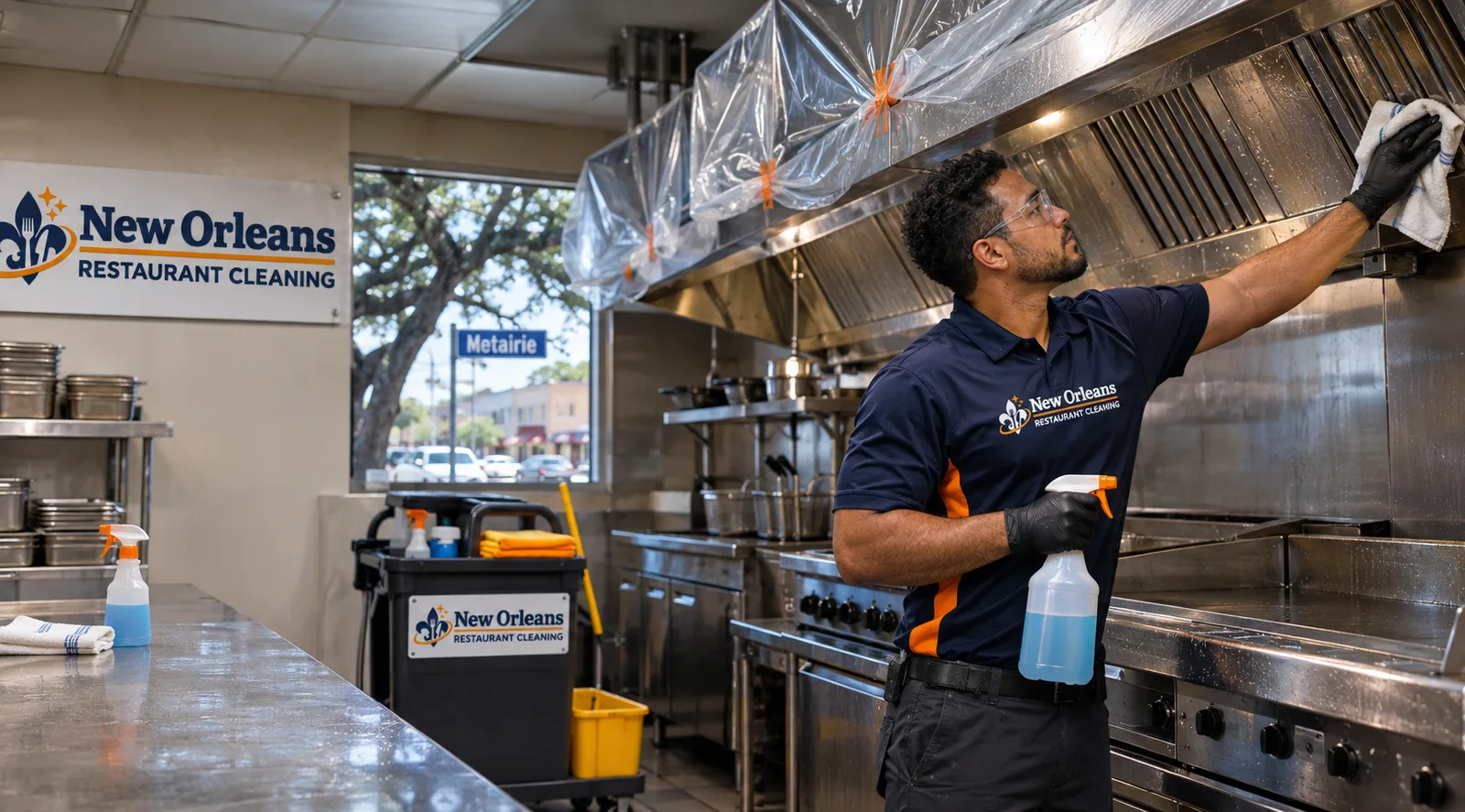
Restaurant Kitchen Cleaning Metairie requires more than a quick wipe of visible surfaces. Grease mist, cooking residue, and dust collect on equipment exteriors, wall surfaces, pipes, conduits, ceiling vents, light housings, and other areas that routine shift cleaning may not reach. New Orleans Restaurant Cleaning develops a practical scope around the kitchen's layout, soil level, sensitive equipment, and available service window.
Our crew is New Orleans' local restaurant service for methodical kitchen cleaning, and we plan the work to reduce disruption to prep and service. Before cleaning starts, we identify restricted areas, confirm which equipment can be moved or accessed, protect food-contact surfaces, and note areas that require extra attention. The result is a defined plan rather than a vague promise to clean the kitchen.
Metairie's restaurants include compact kitchens along Veterans Memorial Boulevard, neighborhood operations near Metairie Road, and busy commercial spaces around Causeway Boulevard. These settings can have tight cook lines, limited staging room, or short overnight access periods. Those conditions affect crew size, equipment placement, and the order in which each area is cleaned.
A detailed service can address floors, baseboards, walls, equipment exteriors, stainless steel surfaces, shelving, backsplash areas, doors, handles, and accessible spaces around or beneath appliances. Degreasing methods are matched to the surface and soil. Stainless steel, painted walls, sealed floors, and plastic components do not all tolerate the same chemistry or agitation.
The scope may also include accessible vertical and overhead surfaces where dust and aerosolized grease settle. Food, utensils, and exposed food-contact items should be removed or fully protected before this work begins. Cleaning technicians use controlled application methods to keep loosened residue from spreading through the kitchen.
This service does not automatically include internal exhaust duct cleaning, fan service, grease-trap pumping, pest treatment, or appliance repair. Those jobs involve different tools and, in some cases, specialized providers. The written scope should clearly identify included surfaces, exclusions, access requirements, and any preparation expected from the restaurant.
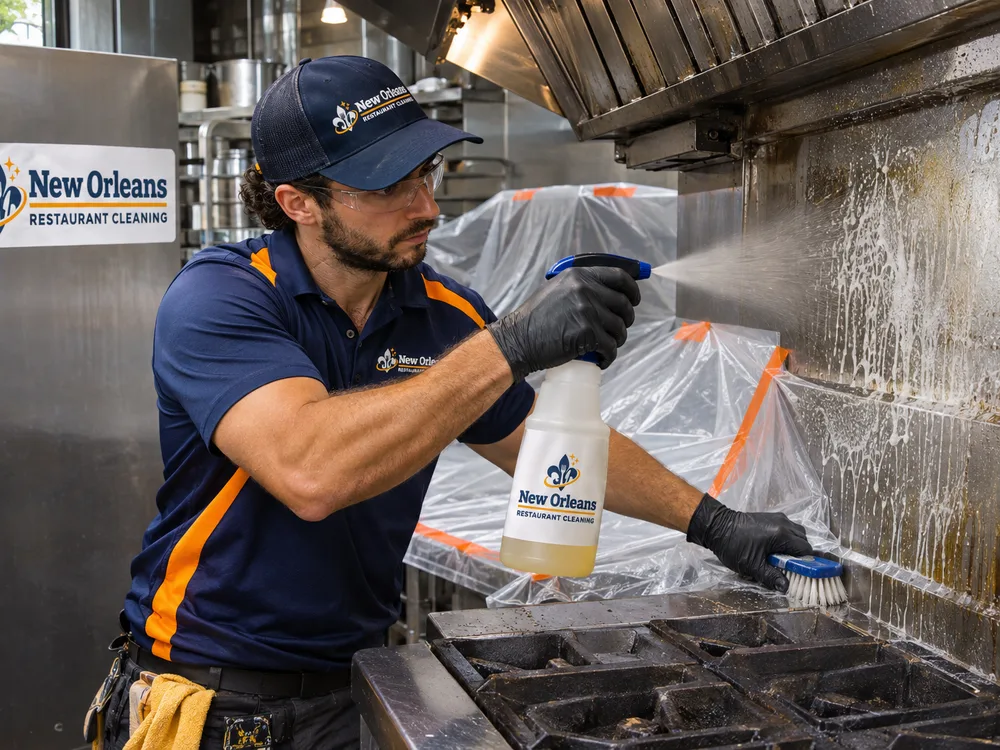
Exposed utility lines can hold layered dust and greasy residue. High dusting removes loose buildup with tools selected for the surface and working height.
Accessible vent covers, light housings, and nearby ceiling surfaces are cleaned carefully so loosened debris is captured instead of dropped onto the cook line.
Upper ledges, partition tops, door frames, and other horizontal surfaces are common collection points that may sit outside daily reach.
Approved fixtures can be dusted or wiped after power, access, and surface condition are reviewed. Electrical components are never saturated.
The tops of coolers, ovens, cabinets, and other tall equipment can collect residue that becomes harder to remove when it remains in place.
Food-contact surfaces and equipment are covered as needed before overhead cleaning. Debris is collected, and the work zone is cleaned before protections are removed.
We discuss the kitchen layout, cooking volume, areas of concern, access restrictions, and the hours available for work. Photos or an on-site review may be needed for complex spaces.
The cleaning plan identifies included surfaces, high-dusting areas, equipment access, preparation duties, and exclusions. Heavy buildup or difficult access is addressed before scheduling.
Food and portable utensils are removed by restaurant staff as agreed. Our crew protects sensitive surfaces, establishes the work zone, and stages tools without blocking required exits.
When overhead work is included, technicians generally start with high surfaces before moving to walls, equipment exteriors, and floors. This order prevents falling residue from soiling finished areas.
The crew checks the included work areas, removes coverings, collects debris, and identifies any condition that could not be resolved through cleaning alone, such as damaged coatings or inaccessible buildup.
Kitchen grease can range from a fresh oily film to a hardened layer mixed with dust and carbonized residue. Effective removal may involve dwell time, agitation, repeated wiping, and careful rinsing where the surface allows it. Stronger chemistry is not always the answer. The cleaner must be compatible with the substrate, and residue must be removed rather than redistributed.
In southeast Louisiana's humid climate, kitchens also need controlled drying after wet cleaning. Standing moisture around wall edges, equipment feet, and floor transitions can delay reopening and leave slippery areas. Air movement, limited water use near sensitive equipment, and a planned cleaning sequence help the kitchen return to service safely.
Routine staff cleaning remains important between professional visits. Wiping new splatter before it cures, keeping floor edges clear, and avoiding storage on equipment tops can slow the return of heavy buildup. The right interval depends on cooking methods, operating hours, ventilation performance, and how quickly residue returns.
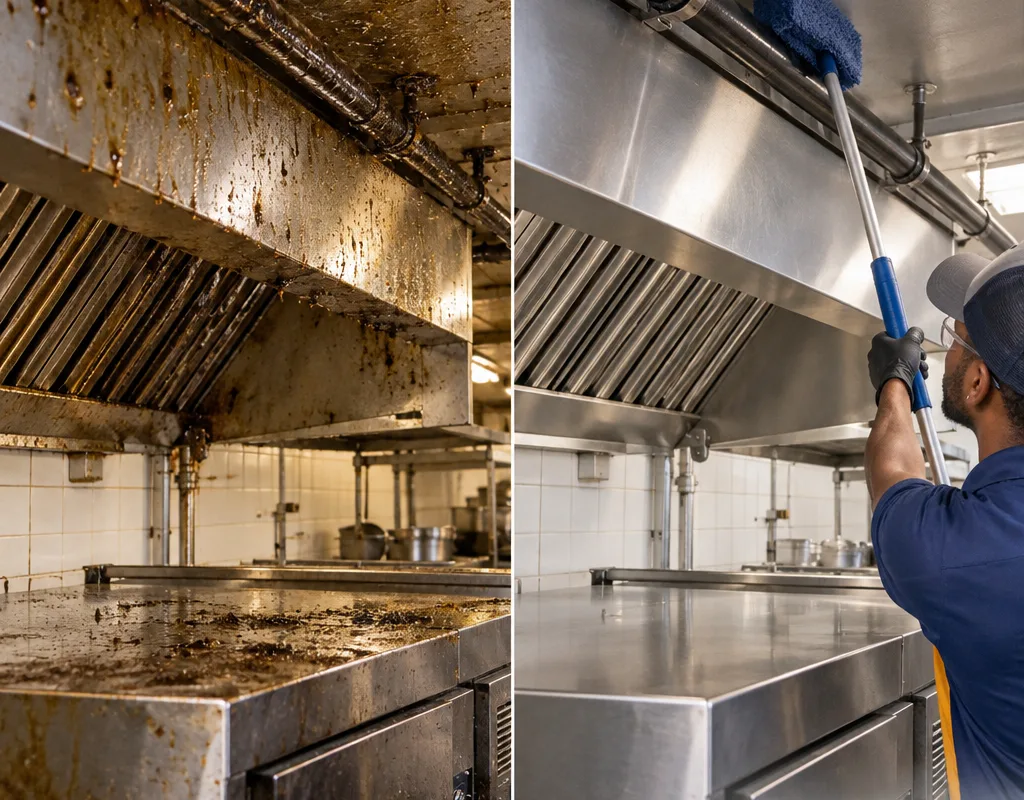
A useful cleaning plan accounts for the hours after the last ticket and before the first prep shift. The available window must include setup, chemical dwell time, cleaning, surface drying, debris removal, and final review. A short service window may require a phased scope rather than trying to cover every area at once.
Access can be just as important as square footage. Narrow cook lines may prevent technicians from reaching behind equipment unless restaurant staff disconnect or relocate approved movable items. Fixed gas, water, refrigeration, and electrical connections should be handled only by qualified personnel. Cleaning crews should not pull connected equipment simply to reach a wall or floor area.
Seasonal storms and heavy rain can also affect scheduling and building access across the New Orleans area. Restaurants should keep emergency access routes and operating priorities clear when arranging overnight work. New Orleans Restaurant Cleaning is based on Read Boulevard in New Orleans and coordinates Metairie projects with realistic travel, setup, and completion windows.
Restaurant kitchen cleaning in Metairie typically ranges from about $500 to $2,500 or more per visit. A small kitchen with moderate soil may fall near the lower end, while a large cook line, heavy grease, extensive high dusting, or overnight work can cost more.
Final pricing depends on kitchen size, buildup, surface types, working height, equipment access, required protection, crew size, and the available service window. A defined scope also prevents unrelated work from being assumed. The exact cost is confirmed after the kitchen's condition and access needs are reviewed.
Yes, overnight cleaning may be scheduled when the available window allows enough time for setup, cleaning, drying, and final review. Metairie restaurants with early prep shifts should provide the required completion time so the crew can build a realistic scope.
A focused cleaning may take several hours, while a large kitchen with heavy buildup and overhead work may require a full shift or phased visits. Square footage alone does not determine timing because tight equipment spacing, working height, and grease condition can add substantial labor.
No, general high dusting does not include internal exhaust ducts or rooftop exhaust fans unless that specialized work is expressly listed in the written scope. High dusting typically addresses accessible pipes, ledges, equipment tops, vent exteriors, light housings, and approved ceiling-level surfaces.
Restaurant staff generally need to remove exposed food, utensils, small appliances, and personal items from the work area. The specific preparation list depends on the scope, but connected equipment should remain in place unless qualified personnel have approved and handled its movement.
The proper interval depends on cooking volume, menu, operating hours, ventilation, and the speed at which grease returns. A high-output fryer or grill line may need more frequent attention than a light-prep kitchen, while overhead surfaces can be scheduled according to observed buildup.
No, cleaning removes soils that respond to suitable chemistry and agitation, but it cannot reverse corrosion, heat damage, worn coatings, etched surfaces, or permanent staining. A pre-service review helps separate removable buildup from material damage.
Overhead cleaning should be completed only after food and utensils have been removed or fully protected and the work zone has been taken out of active use. This is especially important around Metairie kitchens with compact prep lines directly beneath pipes, vents, or shelving.
Tell us about your kitchen, dining areas, schedule, and current cleaning needs so we can discuss the right next step.
After you submit the form, our team will review your details and contact you to discuss the property, priorities, and scheduling.