
Cook-Line Grease
Kitchen Floor Degreasing breaks down oily buildup near fryers, ranges, prep stations, and other high-deposit areas before agitation and recovery.
Serving New Orleans, Louisiana & surrounding areas
Mon–Fri 8am–6pm · Sat 9am–2pm
Remove built-up grease, food residue, and embedded grout soil with a cleaning plan scheduled around your restaurant's operating hours.
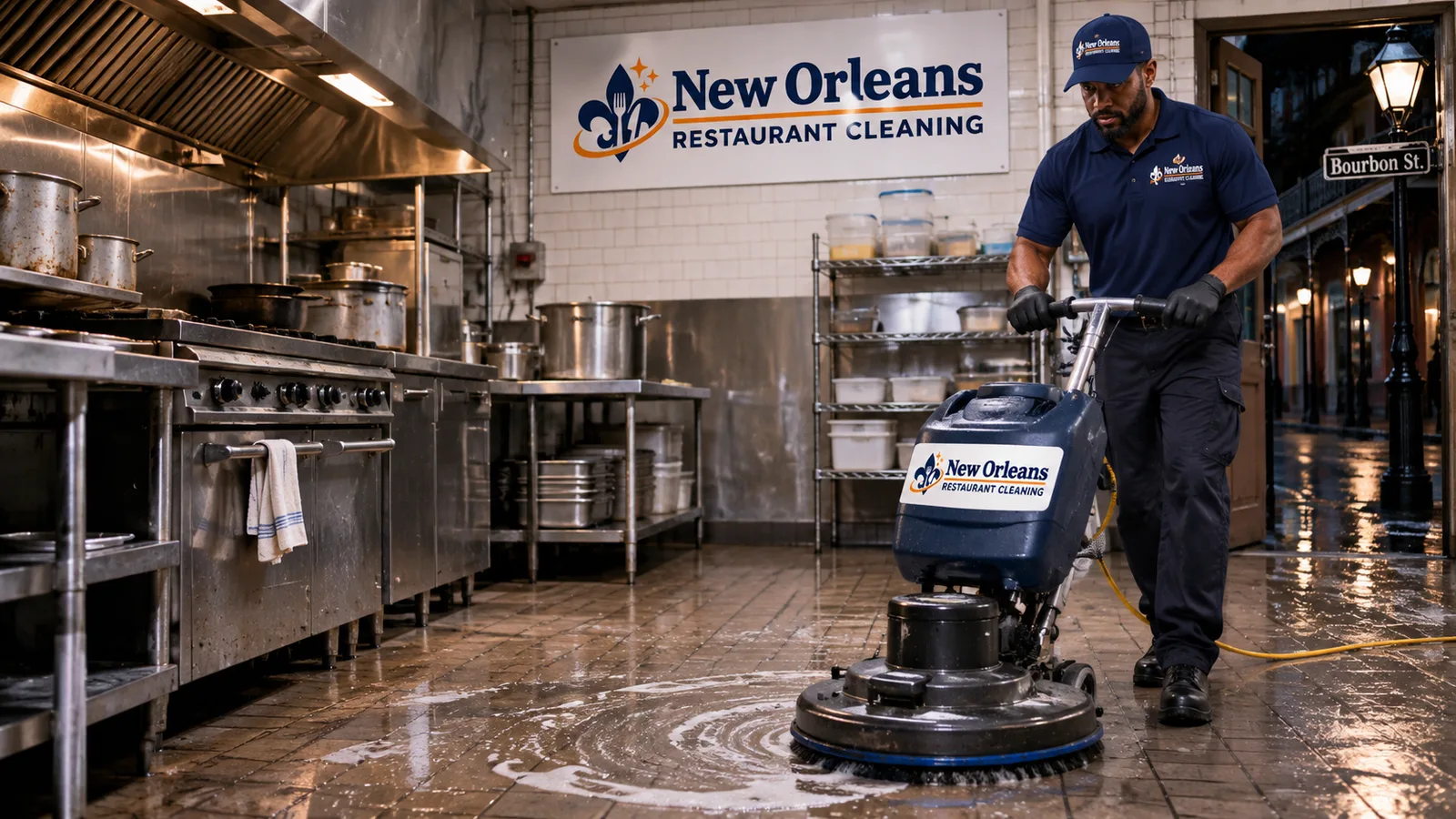
Commercial Kitchen Floor Cleaning targets the grease film, tracked-in soil, food residue, and darkened grout that routine mopping can leave behind. New Orleans Restaurant Cleaning cleans restaurant kitchen floors with commercial degreasers, agitation, controlled rinsing, and soil recovery methods selected for the floor material and its condition.
A kitchen floor is exposed to cooking oils, spills, cart traffic, and repeated wet cleaning. When mop water is reused or cleaning chemistry is not matched to the soil, residue can spread across the surface and collect in grout lines, corners, and around equipment legs. The floor may look dull after drying and become slick again during the next shift.
Our work starts with an assessment of the surface, drainage, access, grease load, and sensitive areas. We are New Orleans' restaurant specialists who plan the work around real kitchen constraints, including equipment that cannot be moved, narrow cook lines, overnight access, and the need to return the area in an orderly condition before the next service period.
Quarry tile and ceramic tile are common choices in commercial kitchens because they tolerate heavy traffic and frequent cleaning. The tile face may release soil readily, but recessed or worn grout can hold grease, carbonized residue, and fine food particles. A mop passes over those low areas without providing enough agitation or extraction.
Restaurant Tile Cleaning begins with dry debris removal and protection of nearby surfaces as needed. An appropriate cleaner is applied at the correct dilution and given enough dwell time to loosen greasy soil. Mechanical agitation then works the solution across the tile and into textured surfaces. Restaurant Grout Cleaning adds focused brushing or machine agitation along grout lines, edges, corners, and transitions.
We avoid treating every floor with the strongest available chemical. Cleaner selection depends on the finish, soil type, grout condition, and manufacturer guidance. An inconspicuous test area can reveal whether a coating, previous sealer, or damaged grout needs special handling. Final rinsing and soil recovery matter because leftover detergent can attract dirt and contribute to a tacky surface.
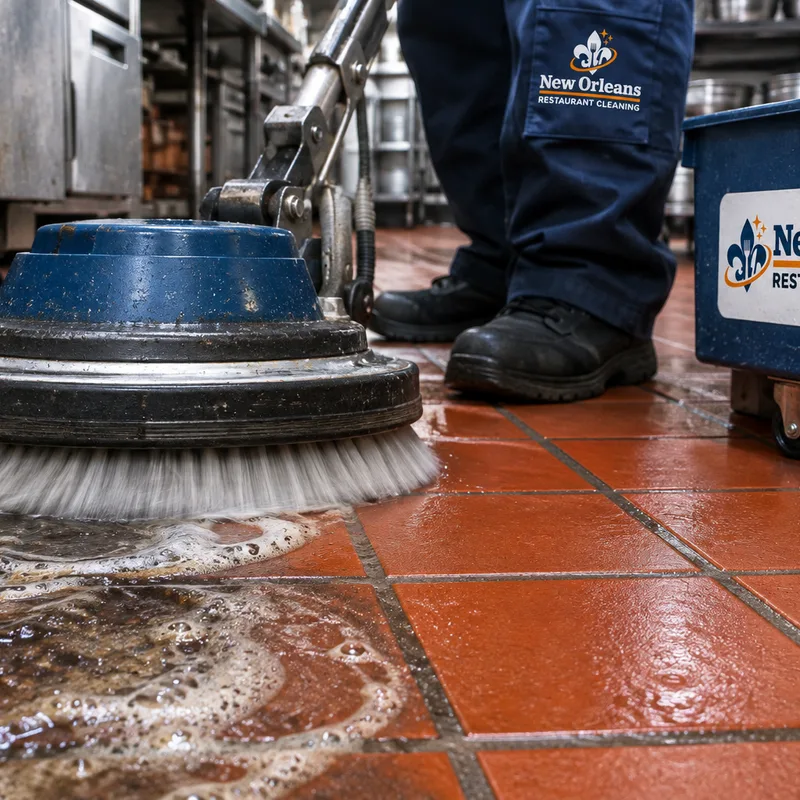
Kitchen Floor Degreasing breaks down oily buildup near fryers, ranges, prep stations, and other high-deposit areas before agitation and recovery.
Focused cleaning reaches recessed joints where mop heads often glide over compacted soil. Existing stains or permanent grout discoloration may remain.
Brushes or floor machines work cleaning solution into surface texture where grease and fine debris can collect.
Detail work addresses corners, wall lines, thresholds, and accessible spaces around fixed equipment where residue tends to accumulate.
Commercial Floor Cleaning in New Orleans may also cover suitable tile floors in server aisles, dish areas, bars, and dining spaces under one defined scope.
A scheduled maintenance plan can reduce the heavy accumulation that develops between occasional restorative cleanings.
Effective Restaurant Floor Degreasing is a controlled process, not simply a stronger mop solution. Degreaser concentration, water temperature, dwell time, and agitation must work together. Too little dwell time limits soil release. Excess chemistry can be harder to rinse and may leave residue if it is not recovered thoroughly.
Before work begins, we identify obvious hazards and note cracked tile, loose grout, failing transitions, damaged coving, and drainage concerns. Cleaning can remove soil, but it does not repair broken materials or correct improper floor slope. These distinctions belong in the scope so restaurant managers understand what cleaning can reasonably improve.
The French Quarter presents tight access, compact kitchens, and limited staging space in many restaurant settings. Central Business District restaurants may need work coordinated around building access and service schedules. In the Warehouse District, larger dining rooms and event-driven operating calendars can affect timing. Mid-City restaurants often combine customer-facing tile with busy back-of-house routes, while Uptown establishments may have narrow service corridors that require smaller equipment and careful sequencing. We account for these conditions when planning Restaurant Floor Cleaning in New Orleans.
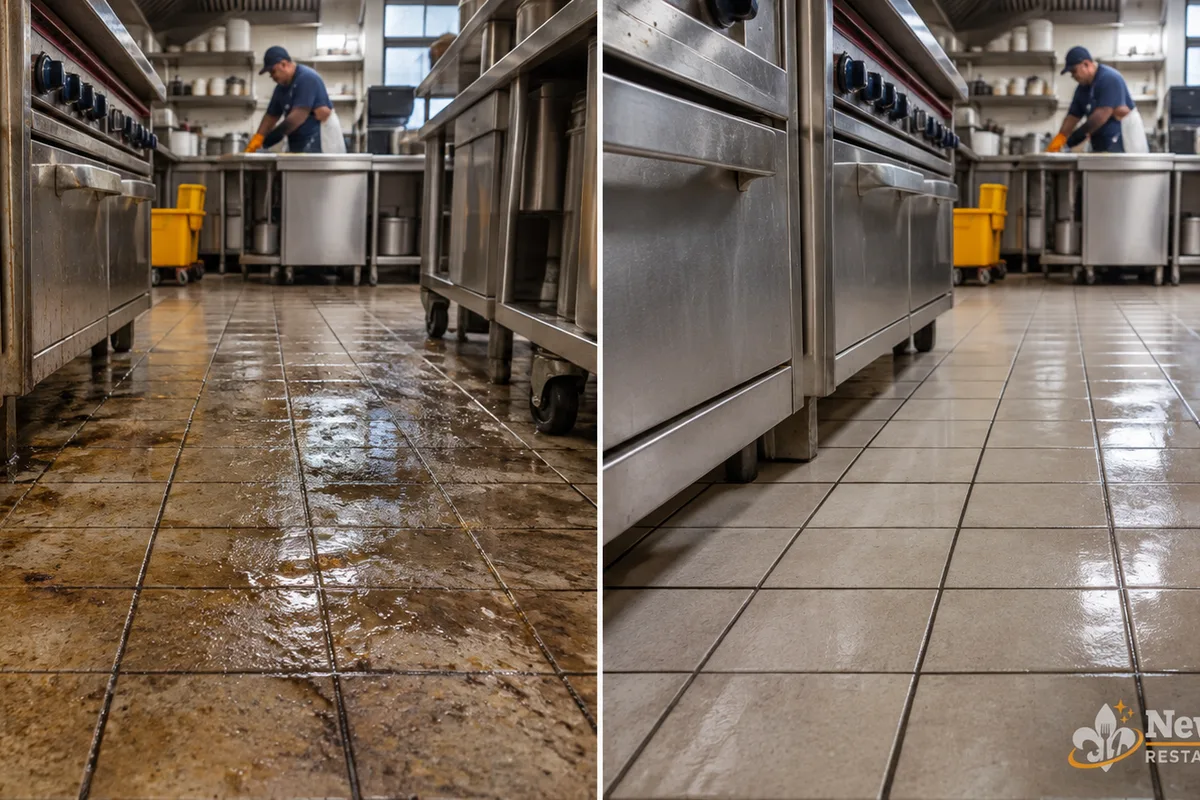
We review floor material, grease concentration, grout condition, drains, movable equipment, access limits, and the areas included in the work.
Loose debris is removed, accessible items are relocated as agreed, and nearby surfaces or sensitive equipment are protected when needed.
A floor-compatible degreaser or detergent is mixed at an appropriate dilution and applied evenly. The solution receives controlled dwell time without being allowed to dry on the floor.
Commercial brushes or floor equipment loosen residue across textured tile, grout joints, corners, edges, and high-grease zones.
Suspended soil and cleaning solution are rinsed and recovered using methods suitable for the room, floor, and drainage arrangement.
We inspect the completed work, identify any permanent staining or material damage that remains, and discuss a practical maintenance interval.
Floor cleaning should fit the restaurant's actual operating schedule. A useful plan accounts for closing duties, equipment cooldown, deliveries, staff access, and the time needed for the floor to dry before normal traffic resumes. Overnight or off-hour work may be appropriate when access and staffing allow it.
Humidity in New Orleans can slow evaporation, especially in enclosed kitchens with limited air movement. Drying time should be treated as part of the schedule rather than an afterthought. Ventilation, floor texture, grout porosity, room temperature, and how much rinse water is required all affect when the area is ready for use.
For recurring service, frequency depends on cooking volume, grease-producing equipment, foot traffic, floor texture, and the restaurant's daily cleaning routine. A high-output fry line usually needs a different plan than a lightly used prep area. We can separate heavily soiled zones from lower-deposit areas so the scope matches how the kitchen is used.
Pricing depends on the cleanable square footage, grease level, floor texture, grout condition, equipment access, and service timing. A compact kitchen with open floor area requires a different labor plan than a large cook line with heavy buildup and extensive detail work. The exact price is confirmed after the floor and requested scope have been reviewed.
Professional cleaning can remove substantial surface grease and embedded soil, but it cannot guarantee removal of permanent stains or damage. Discolored grout, worn coatings, cracked tile, chemical etching, and deeply absorbed contaminants may remain after cleaning. We distinguish removable buildup from material defects during the assessment.
Yes, accessible flooring around fixed equipment can be cleaned, although reach and recovery options depend on clearance. Narrow spaces near fryers, ranges, and prep lines may require hand tools or smaller equipment. Equipment movement must be agreed upon in advance because utility-connected units should not be shifted casually.
The time required depends on floor area, buildup, obstacles, grout detail, and the cleaning method. Smaller kitchens may be completed within one service window, while large or heavily soiled floors can require more time or phased work. New Orleans humidity and limited ventilation can also extend drying time.
Professional cleaning is generally suitable for sound quarry tile and cementitious grout when compatible chemistry and equipment are used. Existing sealer, coatings, loose grout, broken tile, and previous chemical damage may change the method. We assess the surface and can test a small area before broad treatment.
The right interval is based on grease production, traffic, floor texture, and the effectiveness of daily maintenance. Fry stations and busy cook lines may need focused service more often than storage or low-use prep zones. A recurring plan can be adjusted after observing how quickly residue returns.
Loose items should be removed from the agreed work area, while movement of larger equipment should be discussed before scheduling. Clear access reduces missed areas and allows better agitation and soil recovery. The work plan should also account for closing tasks, deliveries, and staff who may need to cross the kitchen.
Tell New Orleans Restaurant Cleaning about your floor type, problem areas, operating schedule, and preferred service window. We will help define a practical scope for tile, grout, and grease removal.
Tell us about your kitchen, dining areas, schedule, and current cleaning needs so we can discuss the right next step.
After you submit the form, our team will review your details and contact you to discuss the property, priorities, and scheduling.