
Cooking-Line Degreasing
Accessible grease and carbon deposits are loosened on equipment exteriors, backsplashes, ledges, legs, and compatible removable parts.
Serving New Orleans, Louisiana & surrounding areas
Mon–Fri 8am–6pm · Sat 9am–2pm
Remove built-up grease, food residue, and grime with a cleaning plan shaped around your equipment, operating hours, and kitchen workflow.
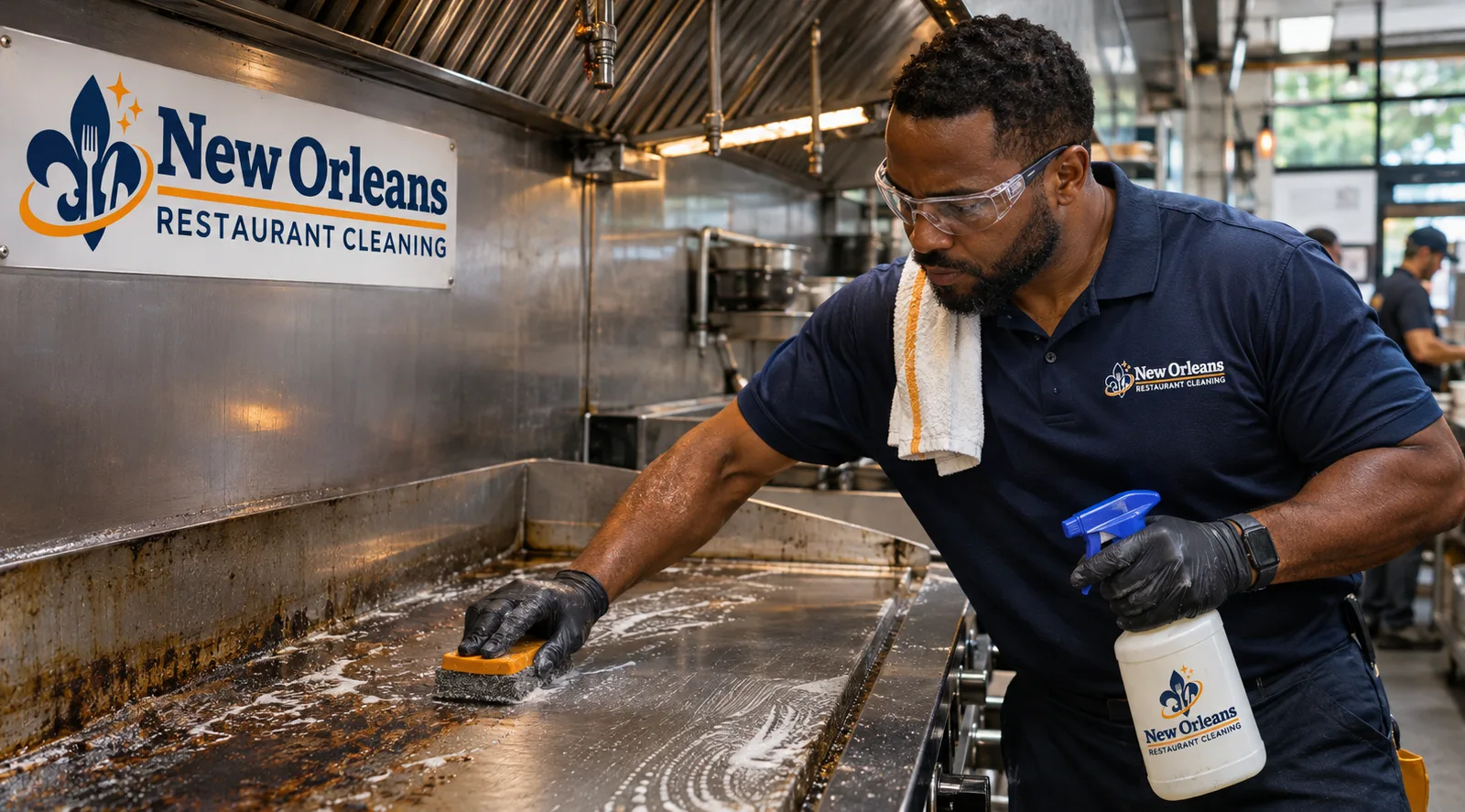
Restaurant Equipment Cleaning Gretna businesses can rely on should address more than the visible fronts of appliances. Grease and food residue collect under equipment, around casters, along control panels, behind splash guards, and in the narrow gaps between the cooking line and wall. New Orleans Restaurant Cleaning develops the scope around the equipment in your kitchen and the buildup found during the initial review.
Our crew cleans restaurant equipment for businesses on the West Bank, including kitchens near the commercial corridors along the Westbank Expressway and Belle Chasse Highway. These routes support a mix of independent restaurants, quick-service operations, and other food businesses with different production schedules. That is why the work plan accounts for access, shutdown time, and when cleaned equipment must be ready for the next shift.
Before cleaning begins, an experienced restaurant team in New Orleans coordinates the kitchen work carefully by identifying the units included in the job, discussing temperature and shutdown requirements, and setting expectations for movable parts, removable components, and surrounding floors. The result is a written scope suited to the actual kitchen rather than a generic checklist.
A restaurant equipment cleaning scope may include ranges, ovens, fryers, griddles, charbroilers, salamanders, steam tables, prep tables, reach-in units, and the accessible exterior surfaces of ice machines and refrigeration equipment. The exact list depends on the equipment manufacturer, condition, accessibility, and whether a unit can be safely shut down.
Cleaning can address stainless steel panels, knobs, handles, legs, casters, drip trays, removable racks, and accessible areas beneath or behind units. Carbonized residue on hot-line equipment often needs dwell time with an appropriate degreaser followed by controlled agitation. Food-contact components require products and rinsing procedures suitable for those surfaces. Technicians also protect electrical controls, gas connections, pilot assemblies, insulation, and other components that should not be saturated.
Exhaust hood and duct cleaning is a separate technical scope from appliance cleaning. Likewise, internal refrigeration coils, sealed machinery, and equipment repairs may require a qualified refrigeration or equipment technician. We define these boundaries before work starts so staff know exactly what is included.
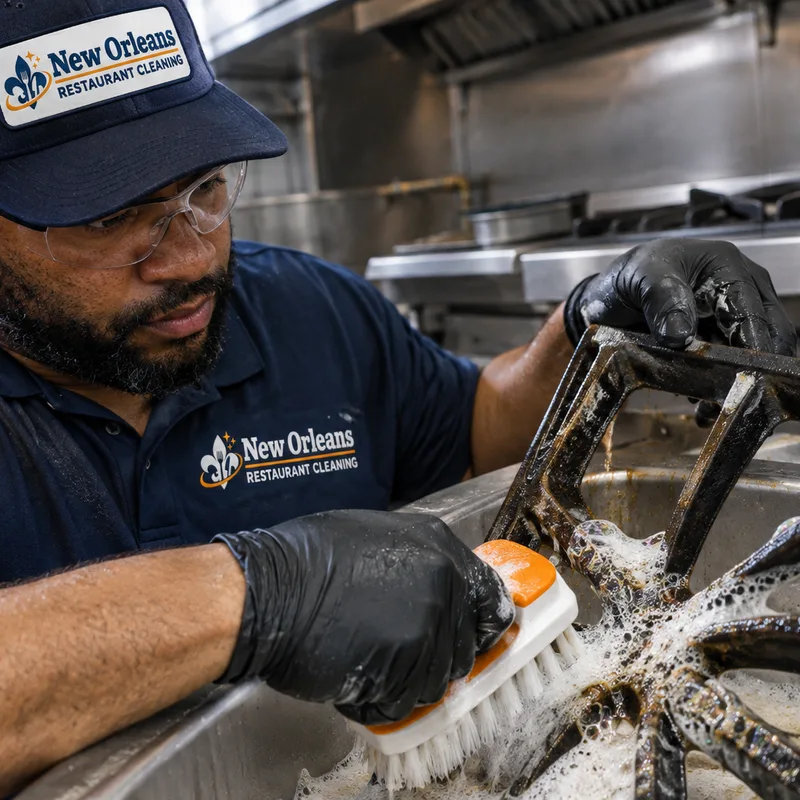
Accessible grease and carbon deposits are loosened on equipment exteriors, backsplashes, ledges, legs, and compatible removable parts.
When units can be moved safely, the crew cleans exposed sides, casters, wall contact areas, and the floor space that routine closing work may not reach.
Reach-ins, prep units, and other refrigeration exteriors can be cleaned without flooding controls, vents, gaskets, or mechanical compartments.
Prep tables, shelves, carts, and compatible equipment surfaces are cleaned with attention to seams, undersides, handles, and support frames.
Knobs, handles, control surrounds, drip trays, racks, and other accessible components receive focused work where residue tends to collect.
One-time projects and recurring plans can be arranged around production hours, kitchen access, and the rate at which grease returns.
Commercial kitchens generate airborne grease, steam, crumbs, and spills throughout service. Heat can bake residue onto equipment, while humidity in the New Orleans area can slow drying if ventilation and airflow are limited. A planned job uses controlled amounts of solution, extraction, wiping, and drying rather than saturating the cooking line.
In Old Gretna, compact commercial buildings may have narrow kitchens or limited rear access. Equipment movement and hose routing must be planned before work begins. Along the Westbank Expressway, larger restaurant and retail properties may provide more staging space, but high customer volume can leave a shorter overnight window. Terrytown businesses may operate in shopping centers where parking, loading access, and neighboring tenants affect setup. Harvey's commercial corridors include freestanding and multi-tenant properties, so crews may need to coordinate arrival and equipment movement with property access rules.
These conditions affect labor and sequencing. They also explain why an on-site review is more useful than pricing based only on square footage. Two kitchens of similar size can require very different amounts of work when one has movable equipment and light film while the other has fixed units with heavy carbon buildup.
We identify the appliances and surfaces to be cleaned, note heavy buildup, confirm what can be moved, and discuss gas, electrical, water, and shutdown considerations with the person responsible for the kitchen.
The work plan lists included equipment and accessible components. Scheduling is based on closing time, cooling requirements, crew access, and when the kitchen must return to production.
Food, utensils, disposable goods, and sensitive items must be removed or protected. Technicians stage tools, isolate the work zone, and protect controls or nearby surfaces that should remain dry.
Compatible products are given appropriate dwell time before residue is agitated and removed. The method may include scraping, brushing, wiping, controlled rinsing, and attention to removable parts.
Cleaned surfaces are checked for remaining residue and left dry. Components moved within the approved scope are returned to position, and any condition that may need repair or specialist attention is reported.
Good preparation reduces downtime. The kitchen contact should confirm which equipment may be turned off, how long hot appliances need to cool, and whether gas-connected or hardwired units may be moved. Staff should remove food, pans, utensils, paper goods, and personal items from the work zone. Cleaning crews should not disconnect regulated utility connections or attempt equipment repairs unless specifically qualified to do so.
For overnight work, access instructions should cover parking, loading doors, alarms, keys, and the person authorized to approve changes in scope. If a fryer must be drained or an oven must complete a cool-down cycle, the restaurant should assign that task to trained staff unless the written scope states otherwise. Grease, wastewater, and removed residue must be handled without sending heavy solids or grease into floor drains.
A recurring plan may focus on different groups of equipment at different visits. One visit might concentrate on the hot line, while another addresses refrigeration exteriors, prep equipment, and difficult floor edges. Rotation keeps the workload manageable and allows the restaurant to schedule intensive work when particular units can be taken out of service.
Restaurant equipment cleaning in Gretna typically ranges from several hundred dollars for a small, lightly soiled equipment group to a few thousand dollars for a full commercial line with heavy grease and carbon buildup. Final pricing depends on the number and type of units, residue level, removable parts, access behind equipment, required shutdown time, and whether work must occur overnight. Fixed or connected appliances generally take longer than movable units. The exact cost is confirmed after an equipment review and written scope.
Request a CallbackYes, equipment cleaning can often be scheduled after closing when the kitchen is cool and clear of active food preparation. The workable time depends on staff cleanup, appliance cool-down, building access, and when cooking must resume. Gretna restaurants near busy West Bank commercial corridors should allow time for crew setup and final drying rather than treating closing time as the immediate start of cleaning.
A small group of accessible appliances may be completed during one work window, while a full line with heavy carbon buildup can require a longer shift or phased visits. Equipment count, grease thickness, removable components, tight clearances, and cooling time affect the schedule. A walkthrough provides a more reliable duration than kitchen square footage alone.
Only equipment within or immediately beside the work area generally needs to be shut down, but each unit must be cool enough for safe cleaning. Fryers, griddles, ovens, and charbroilers may need extra cooling time. Gas, electrical, and manufacturer requirements also affect whether equipment can be moved or cleaned in place.
Movable equipment can be repositioned when access, weight, connections, and floor conditions allow it. Units with fixed gas lines, hardwired power, water connections, fragile casters, or uncertain clearances may need to remain in place or be moved by a qualified equipment professional. The initial review identifies those limits before the job is priced.
The right interval depends on cooking volume, menu, equipment design, and the effectiveness of daily cleaning. Frying and charbroiling often create faster grease and carbon accumulation than cold prep. A practical recurring schedule is set after the first cleaning reveals how quickly residue develops in that specific kitchen.
No, appliance cleaning and exhaust-system cleaning are separate scopes. Equipment cleaning addresses accessible surfaces and components on ovens, fryers, ranges, refrigeration exteriors, and prep units. Exhaust hood work involves the hood, filters, ductwork, and fan, which require their own access, methods, and service schedule.
Staff should remove food, cookware, utensils, disposables, chemicals, and loose items from the scheduled work area. Hot equipment should be turned off early enough to cool, and authorized staff should handle draining or shutdown tasks required by restaurant procedures. Clear loading and alarm instructions are especially helpful for overnight access in multi-tenant Gretna properties.
Tell New Orleans Restaurant Cleaning which appliances need attention, when your kitchen can provide access, and where buildup is most severe. We will outline the work and scheduling needs before cleaning begins.
Tell us about your kitchen, dining areas, schedule, and current cleaning needs so we can discuss the right next step.
After you submit the form, our team will review your details and contact you to discuss the property, priorities, and scheduling.