Commercial kitchen cleaning · New Orleans

Commercial Kitchen Cleaning Services

Detailed cleaning for cooking lines, equipment, prep areas, floors, and hard-to-reach surfaces, scheduled around your operating hours.

✓Written cleaning scopes
✓One-time or recurring work
✓Scheduled around operations
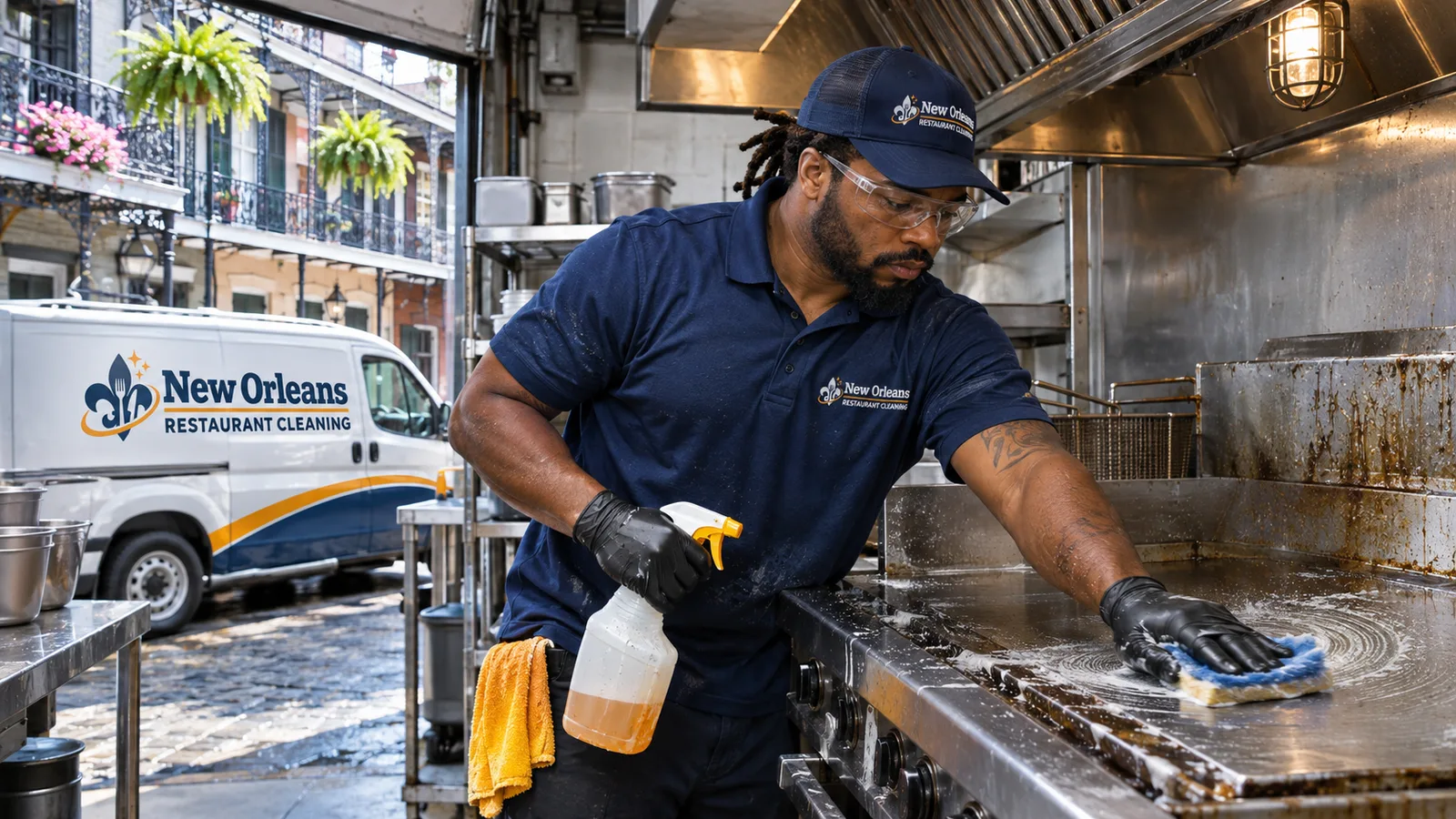
Trained cleaner degreasing stainless steel cooking equipment in a working New Orleans commercial kitchen
Defined around your facility

Professional Cleaning for Hard-Working Kitchens

Commercial Kitchen Cleaning Services address the grease, carbon deposits, food residue, and soil that routine closing work may leave behind. New Orleans Restaurant Cleaning develops a practical scope around your equipment, kitchen layout, operating schedule, and problem areas. That may mean a one-time reset before an inspection, recurring deep cleaning, or focused work on heavily used equipment and floors.

Our crew works systematically rather than treating the kitchen like a general commercial space. As a restaurant company New Orleans homeowners rely on, we bring the same care for access, communication, and clearly defined work to every commercial kitchen assignment. Before service begins, we confirm what will be cleaned, which equipment must be cool or disconnected, what your staff should move, and when the kitchen needs to be ready for use again.

Request a Callback
Included cleaning zones

What Our Kitchen Cleaning Services Can Cover

Cooking Line and Equipment Exteriors

Degreasing for ranges, ovens, fryers, griddles, salamanders, hot lines, and other accessible equipment surfaces. The exact scope accounts for manufacturer guidance, electrical components, gas connections, and surfaces that must remain dry.

Equipment Interiors

Kitchen Equipment Cleaning may include approved interiors, removable racks, trays, filters, and other serviceable parts when access and equipment instructions allow. We identify exclusions before work starts.

Prep and Wash Areas

Cleaning for stainless steel tables, shelving, sinks, backsplashes, wall surfaces, and accessible areas around dishwashing stations. Food, utensils, and portable items should be removed before deep cleaning.

Floors and Floor Edges

Degreasing and agitation target textured flooring, grout lines, corners, and the buildup beneath movable equipment. Extraction or controlled rinsing is selected according to the floor and available drainage.

Walk-Ins and Storage Areas

Empty cooler, freezer, and dry-storage surfaces can be cleaned after products are removed or securely protected. Temperature-sensitive work requires coordination with restaurant management.

Walls and High-Touch Surfaces

Washable walls, doors, handles, shelving, kick plates, and other frequently handled surfaces can be incorporated into a defined Restaurant Kitchen Cleaning scope.

Facility-specific deep cleaning

Commercial Kitchen Deep Cleaning Built Around the Facility

Every kitchen accumulates soil differently. Fry-heavy cooking produces stubborn grease around the line and nearby floors. High-volume prep can leave residue beneath tables, racks, and equipment. Older kitchens may have tight clearances that require more handwork, while newer facilities can still develop buildup along casters, floor-wall junctions, and utility penetrations.

French Quarter restaurants often have compact back-of-house layouts and restricted loading access, so equipment movement and arrival timing need careful planning. Large kitchens in the Central Business District may have building access rules, service elevators, or narrow delivery windows. Magazine Street dining rooms commonly operate close to neighboring businesses and residences, making quiet overnight or early-morning coordination useful. In Mid-City, independent restaurants often need cleaning divided into manageable zones so the kitchen can return to production promptly.

New Orleans heat and humidity can add to an already demanding kitchen environment. A Professional Kitchen Cleaning plan should control moisture, avoid overspray, and allow cleaned surfaces to dry before food preparation resumes.

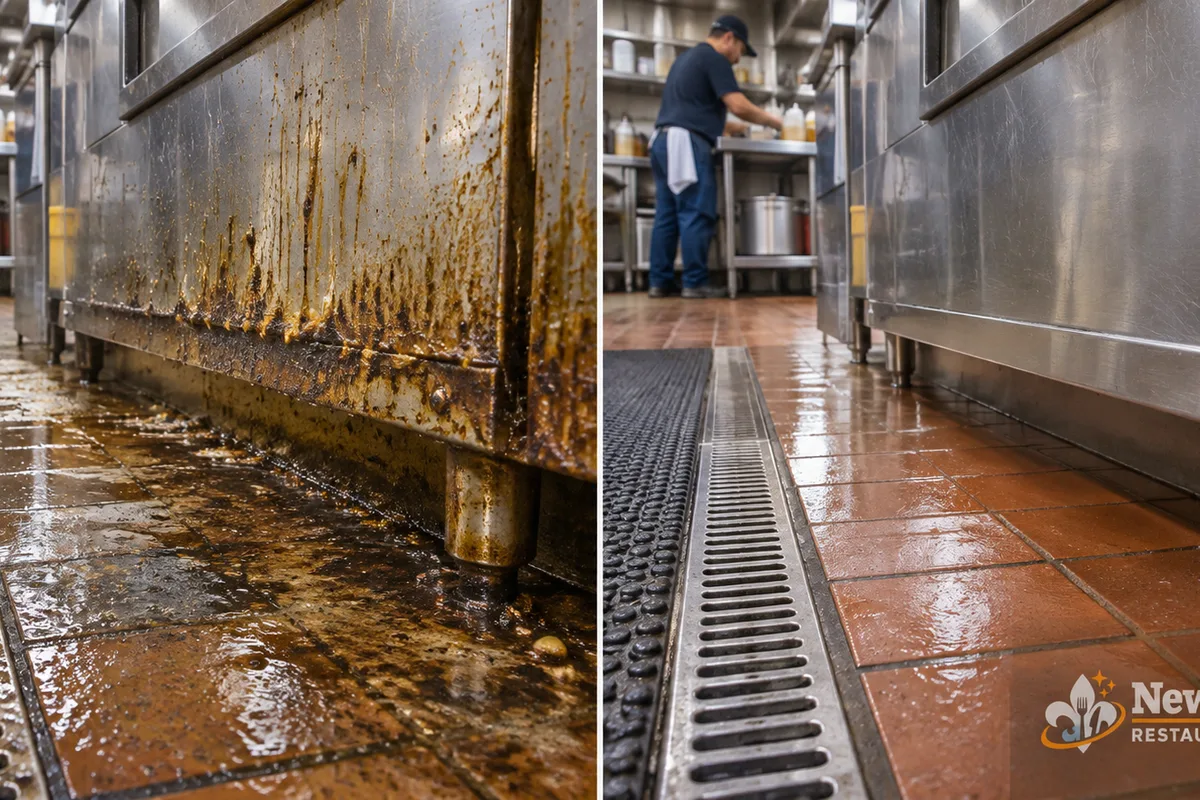
Side-by-side view of a grease-coated commercial kitchen floor edge and the same area after detailed degreasing and extraction
Detailed work targets edges, corners, casters, and spaces missed during ordinary closing routines.
From walkthrough to reset

How Our Commercial Kitchen Cleaning Services Work

Request a Callback
01

Walk Through the Kitchen

We review the cooking line, prep stations, wash areas, floors, storage spaces, and access constraints. The walkthrough establishes priorities and identifies delicate finishes, damaged surfaces, exposed electrical components, and equipment that should not be moved.

02

Define the Scope and Schedule

You receive a clear description of included areas, exclusions, preparation duties, and expected timing. Service can be planned after closing, during a scheduled shutdown, or in stages when the facility cannot be taken fully offline.

03

Prepare and Protect

Food-contact items and loose products are removed or protected. Equipment is cooled as required, and the crew isolates the work zone. Sensitive controls, pilot assemblies, outlets, and adjacent finished surfaces receive appropriate protection.

04

Degrease, Agitate, and Remove Soil

The crew applies surface-appropriate chemistry, allows suitable dwell time, and loosens residue through hand detailing or mechanical agitation. Soil and cleaning solution are then collected by wiping, wet vacuuming, extraction, or controlled rinsing as conditions permit.

05

Inspect and Reset the Area

Cleaned surfaces are checked against the agreed scope. Removable items are replaced where included, floors are left ready to dry, and any inaccessible buildup or maintenance concern is reported to the kitchen contact.

Clear service boundaries

Cleaning Is Different From Exhaust-System Service

A Kitchen Cleaning Company may clean visible hood surfaces, removable filters, and surrounding wall areas when those tasks are included. Cleaning the internal exhaust system is a separate specialty. Hood plenums, ducts, and rooftop exhaust fans require appropriate access, methods, and documentation and should be handled by a qualified exhaust-system provider.

The same distinction applies to pest control, equipment repair, drain service, and fire-suppression work. Deep cleaning can expose loose seals, damaged grout, corrosion, leaks, or failing casters, but cleaning does not correct those defects. Keeping each trade's responsibility clear helps restaurant operators coordinate work safely and avoid assuming that a hidden or mechanical component was serviced.

Request a Callback
Local pricing factors

How Much Does Commercial Kitchen Cleaning Cost in New Orleans?

Commercial kitchen deep cleaning in New Orleans typically costs about $500 to $2,500, while large, heavily soiled kitchens or multi-zone projects can cost more. A focused equipment or floor assignment generally falls toward the lower end; full cooking-line, prep-area, wall, and floor cleaning falls higher.

Price changes with square footage, grease accumulation, equipment quantity, access, overnight scheduling, and whether equipment must be moved. Internal exhaust cleaning, repairs, and hazardous-material work are separate. The exact cost is confirmed after a walkthrough or detailed consultation.

Request a Callback
Recurring kitchen care

A Practical Schedule for Restaurant Kitchen Cleaning

The right frequency depends on cooking volume, menu, staffing, equipment, and the effectiveness of daily closing procedures. A fryer line may need focused degreasing more often than a low-grease prep kitchen. Floor edges, spaces behind movable appliances, oven interiors, walk-ins, and storage racks can each follow different cycles.

A useful plan separates daily staff duties from periodic professional work. Your team may wipe food-contact surfaces, sweep and mop, empty grease containers, and clean removable components as required by house procedures. Restaurant Kitchen Cleaners in New Orleans can then handle the heavier, slower work that requires concentrated degreasers, dwell time, mechanical agitation, wet extraction, or access beneath equipment.

Recurring service also makes budgeting and preparation easier. The written scope should state which zones are addressed at each visit rather than relying on a vague promise to deep-clean the kitchen.
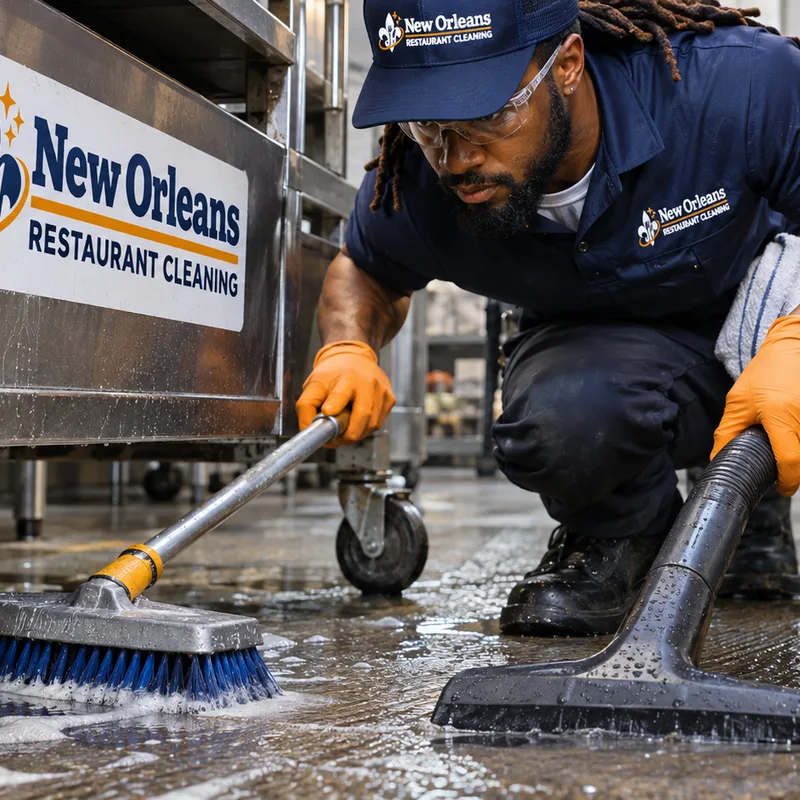
Commercial kitchen cleaner using a deck brush and wet vacuum along textured flooring beneath movable stainless steel equipment
Mechanical agitation and controlled soil removal are selected for the floor, drainage, and surrounding equipment.
Clear answers before service

Commercial Kitchen Cleaning New Orleans FAQs

How long does a commercial kitchen deep cleaning take?+

A focused assignment may take several hours, while a full deep clean can require an overnight shift or a planned shutdown. Kitchen size, grease level, equipment access, and the number of cleaners all affect timing. Compact French Quarter kitchens may be small but labor-intensive because equipment clearances and loading access are limited. The schedule is set after the scope is reviewed.

Can you clean after the restaurant closes?+

Yes, service can be scheduled around operating hours when crew and facility access are available. After-hours work is often the best fit for New Orleans restaurants that need cooking surfaces cool and production areas clear. Management should arrange entry, alarm procedures, parking or loading access, and a responsible contact before the crew arrives.

What must our staff do before the cleaning crew arrives?+

Staff generally need to remove food, utensils, portable appliances, cardboard, and personal items from the agreed work zones. Cooking equipment should be shut down and cooled according to its operating instructions. Walk-ins must be emptied or prepared as agreed, and the crew needs access to water, electricity, drains where appropriate, and waste-handling areas.

Do you clean underneath and behind kitchen equipment?+

Accessible areas beneath and behind equipment can be included when the equipment can be moved safely. Gas-connected, hard-plumbed, built-in, or unusually heavy appliances may need a qualified technician or facility representative before movement. The walkthrough identifies what can be reached and prevents damage to utility connections, flooring, and equipment.

Are food-contact surfaces ready to use immediately afterward?+

Food-contact surfaces must receive any required rinsing or sanitizing and be allowed to dry before food preparation resumes. Cleaning removes soil; sanitizing is a separate step that reduces microorganisms on a previously cleaned surface. The agreed scope should state who performs the final sanitizing step and when kitchen staff may reset ingredients and utensils.

Does professional kitchen cleaning include the hood and ductwork?+

Visible hood surfaces and removable filters may be included, but internal hood, duct, fan, and exhaust-system cleaning is separate unless explicitly documented. Those concealed components require specialized access and service practices. Restaurant managers should verify the exact boundaries of both scopes before scheduling work.

Can cleaning be limited to one problem area?+

Yes, targeted cleaning can address a cooking line, floor, equipment group, prep room, or empty walk-in. This can suit a restaurant preparing for maintenance, reopening a closed zone, or correcting heavy buildup without taking the full kitchen offline. A walkthrough confirms whether nearby surfaces also need protection or cleaning.

Plan your restaurant cleaning

Get a Clear Cleaning Scope for Your Restaurant

Tell us about your kitchen, dining areas, schedule, and current cleaning needs so we can discuss the right next step.

Request a quote

Tell Us What Your Restaurant Needs

After you submit the form, our team will review your details and contact you to discuss the property, priorities, and scheduling.