
Dining Rooms and Guest Areas
Tables, chair contact points, ledges, partitions, entry glass, and floors receive the work specified for each visit. Cleaners can follow a reset plan so furniture and guest-facing areas are ready for opening staff.
Serving New Orleans, Louisiana & surrounding areas
Mon–Fri 8am–6pm · Sat 9am–2pm
Walk into a clean kitchen, dining room, and restroom after every scheduled visit, with a nightly scope built around your closing time and operating needs.
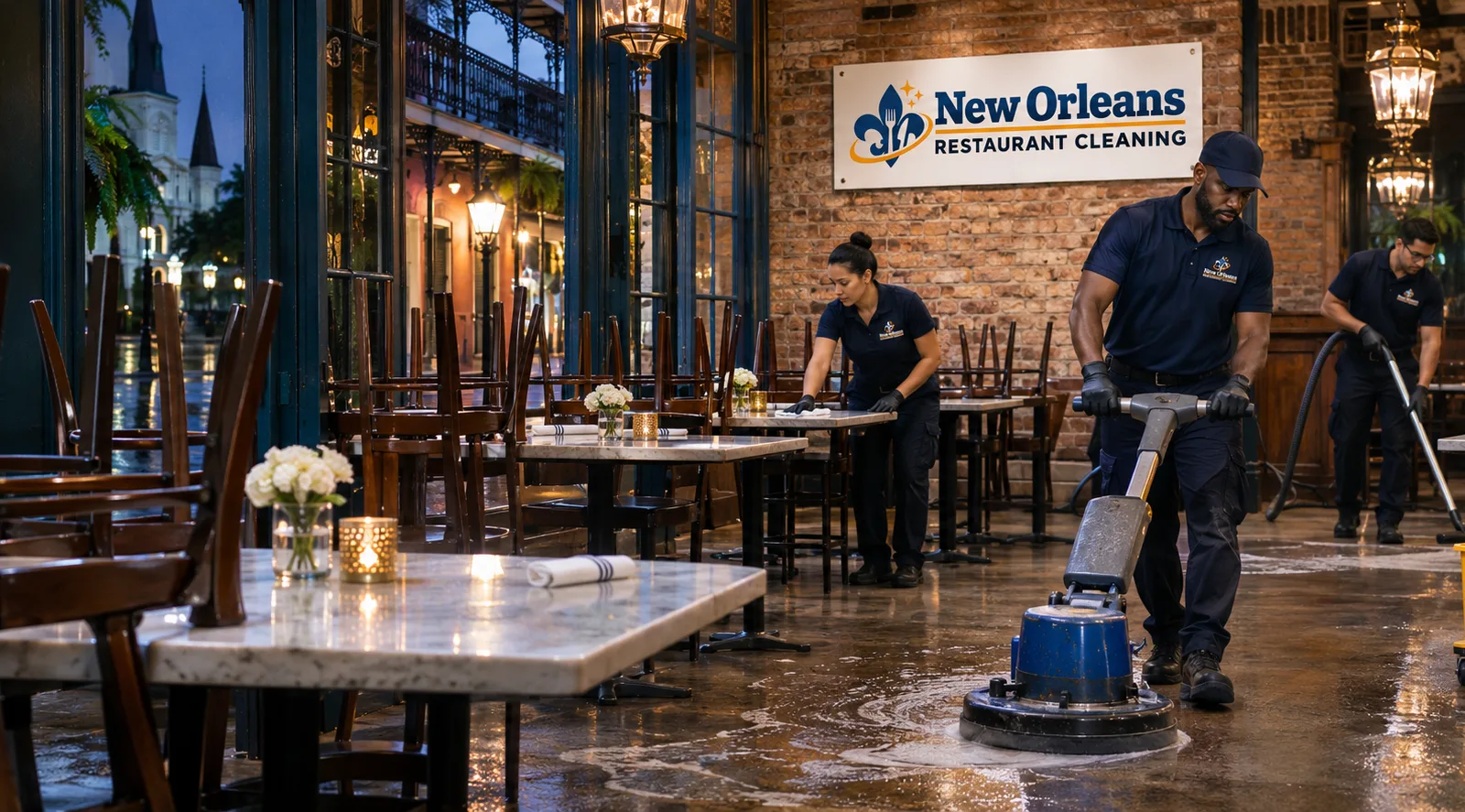
Overnight Restaurant Cleaning gives your staff a clean, orderly workplace at the start of the next shift. New Orleans Restaurant Cleaning schedules work after closing so cleaners can address floors, dining areas, restrooms, and agreed kitchen surfaces without interrupting guests or competing with active food preparation.
We begin with a walkthrough and written scope. Our team at a professional restaurant company in New Orleans matches the cleaning plan to your floor materials, nightly closing routine, access requirements, and busiest service periods. A French Quarter restaurant dealing with heavy pedestrian traffic may need close attention to entry floors and dining-room spill residue. A Magazine Street dining room may have a mix of tile, wood, upholstery, and glass that requires surface-specific products. Restaurants near the Central Business District may also need schedules coordinated around late events and changing guest volume.
Humidity and frequent rain can bring moisture and tracked soil through entrances. Night cleaning should account for those conditions rather than relying on the same checklist every evening. The goal is consistent work, clear responsibilities, and enough time for cleaned surfaces to dry before employees return.
A restaurant night cleaning scope should name the rooms, surfaces, methods, and frequency. In dining areas, that may include wiping tables and chair contact points, removing crumbs and debris, cleaning glass, spot-cleaning partitions, dusting reachable surfaces, and servicing floors. Floor care is selected by material and condition: vacuuming for carpet, dust mopping and damp mopping for resilient surfaces, or automatic scrubbing where the layout and flooring allow it.
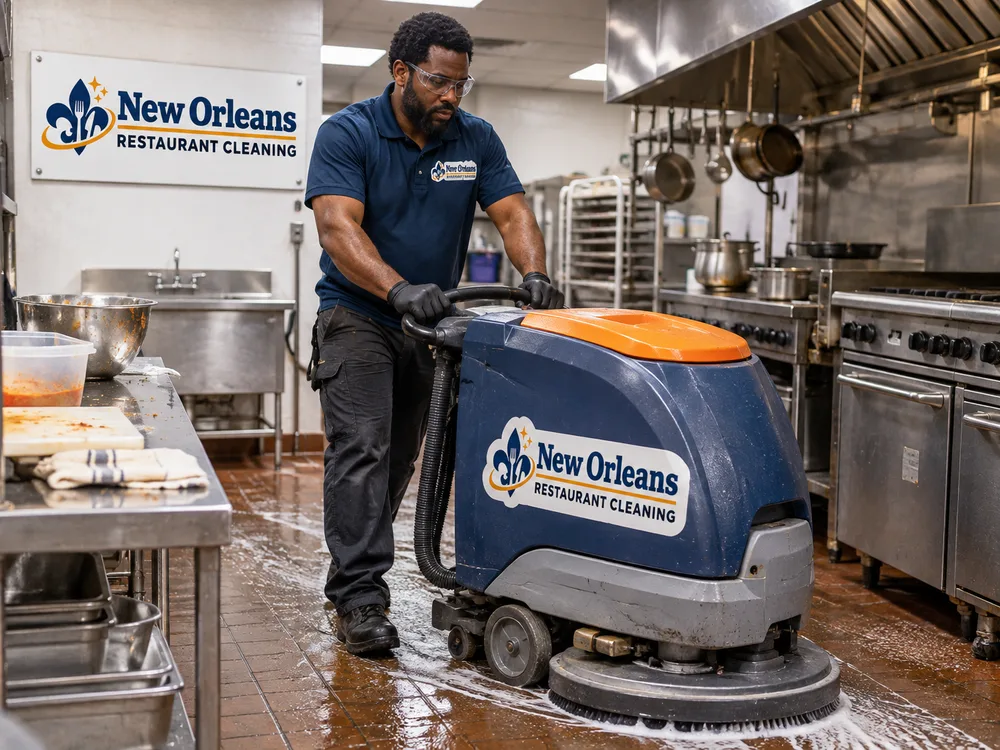
Kitchen janitorial work commonly addresses accessible floors, walls, doors, non-food-contact exteriors, sinks, and other agreed surfaces after restaurant employees have removed food and completed their closing duties. Degreasers need correct dwell time, and cleaning chemicals must be used according to their labels. Food-contact surfaces require products and procedures appropriate to that use. Exhaust-system cleaning, pest control, hood work, and equipment repair are separate specialties unless they are expressly included in a written agreement.
Trash and recycling tasks can also be assigned, including replacing liners and cleaning designated receptacles. The final scope should state where waste is moved and which back-of-house areas are included.
Tables, chair contact points, ledges, partitions, entry glass, and floors receive the work specified for each visit. Cleaners can follow a reset plan so furniture and guest-facing areas are ready for opening staff.
Toilets, urinals, sinks, counters, mirrors, partitions, dispensers, touchpoints, and floors are cleaned according to the approved checklist. Supplies can be restocked when the restaurant provides them or includes replenishment in the agreement.
Loose debris is removed before grease-cutting floor cleaning. Corners, edges, routes around fixed equipment, and accessible areas under movable items can be assigned separately so responsibilities remain clear.
Agreed non-food-contact exteriors, cabinet fronts, shelving, floor areas, and glass can be cleaned after staff secure products and complete their own closing procedures.
Interior receptacles can be emptied, relined, and wiped as scheduled. The scope may also identify designated routes and exterior collection points to prevent uncertainty at the end of a visit.
Baseboards, vents, high dusting, grout attention, upholstery cleaning, and deeper floor care can be rotated through the schedule instead of being rushed into every nightly visit.
We review the kitchen, dining room, bar, restrooms, entrances, storage areas, and waste route. The walkthrough also identifies flooring, delicate finishes, access limits, alarm procedures, and surfaces that remain the restaurant staff's responsibility.
The proposal lists included areas, visit frequency, expected tasks, periodic work, supply arrangements, and exclusions. Priorities can differ by day, especially when weekend traffic or events produce heavier floor and restroom use.
We establish an arrival window that follows the restaurant's closing routine. Key, lockbox, alarm, and manager-notification procedures are documented so the crew can enter and secure the property correctly.
The crew follows the site checklist and reports unusual conditions such as leaks, broken dispensers, unsecured doors, or blocked access. Quality checks compare completed work against the written restaurant janitorial cleaning scope.
Menus, hours, events, staffing, and guest volume change. A recurring plan can be revised when a room needs more attention, a task needs a different frequency, or seasonal traffic affects the nightly workload.
Restaurants do not all close the same way. A compact French Quarter operation may have narrow access, limited staging space, and a late closing time. A larger restaurant in the Warehouse District may need cleaning coordinated around private events and multiple dining areas. In Mid-City, wet-weather traffic can increase the amount of soil carried across entries and dining floors. Along Magazine Street, varied storefront layouts and finish materials may call for different tools within one property.
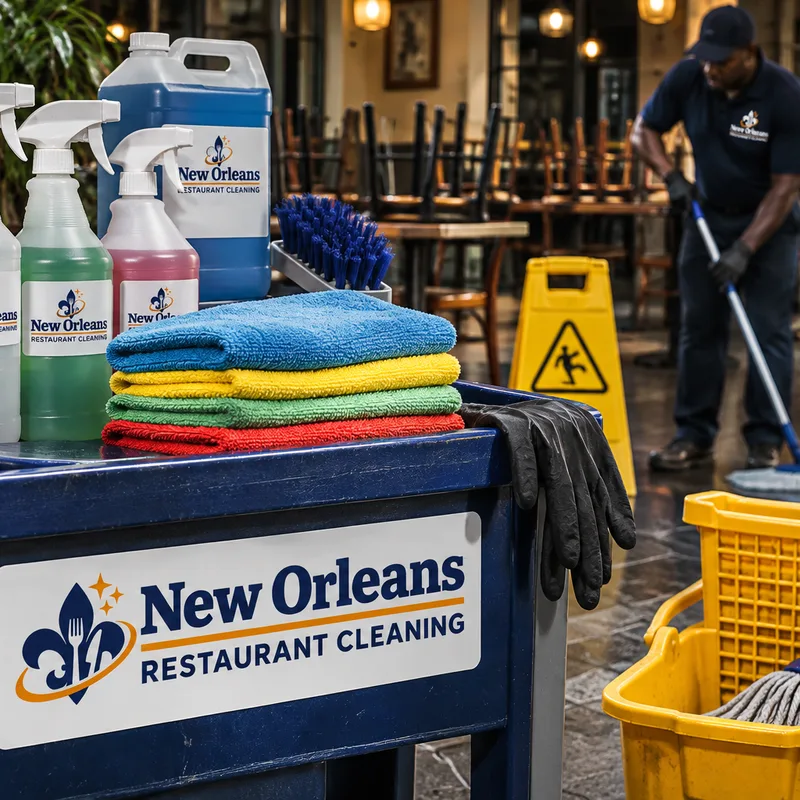
A dependable restaurant janitorial company plans for those differences. Color-coded microfiber cloths and mop systems can help separate restroom tools from dining and kitchen tools. Clean-to-dirty work order reduces the chance that soil is carried back across completed areas. Safety data sheets should be available for workplace chemicals, and containers should remain labeled. Wet floor signs and controlled access are necessary while floors are being serviced.
Nightly work also needs a realistic completion window. If staff are still cooking, moving deliveries, or closing the bar, cleaners may be unable to reach assigned surfaces. A clear handoff between the manager and crew protects the schedule and produces more consistent results.
Ask for a scope that states exactly what happens nightly, weekly, and periodically. General phrases such as “clean the kitchen” leave too much open to interpretation. A useful agreement identifies the included floors and fixtures, whether furniture is moved, who handles consumables, how waste is managed, and which specialized tasks are excluded.
Discuss quality control before service begins. Find out how missed tasks are reported, who receives manager feedback, and how the cleaning company handles a late closing or blocked work area. Access deserves the same care. The plan should address keys, alarm codes, employee entrances, final lockup, and notification if a door cannot be secured.
Product selection matters around food operations. The cleaning crew should follow label directions, respect required contact or dwell time, avoid incompatible chemicals, and keep restroom tools separate from kitchen and dining tools. If your restaurant has natural stone, sealed wood, specialty metal, or another sensitive finish, identify it during the walkthrough so the appropriate method can be specified.
Daily restaurant cleaning works best when restaurant staff and janitorial staff have defined roles. Closing employees may clear food, secure alcohol, wash cookware, and prepare equipment according to house procedures. The janitorial crew then completes the contracted cleaning tasks without guessing what is safe to move, open, or discard.
Pricing depends on the restaurant's size, visit frequency, condition, floor types, closing time, and included tasks. Restroom count, grease buildup, waste handling, periodic floor care, access restrictions, and a short overnight work window can all affect labor. A walkthrough is the best way to produce a written price tied to an exact scope rather than a broad estimate.
Yes, restaurant night cleaning can be scheduled after a late close when the access and completion windows provide enough time for the agreed work. This is especially relevant for French Quarter and Warehouse District restaurants with late service or events. The plan should state when the crew may enter, who confirms that staff have finished, and when the building must be secured.
Restaurant restroom cleaning can include toilets, urinals, sinks, counters, mirrors, partitions, dispensers, touchpoints, receptacles, and floors. The agreement should also state whether the crew replenishes paper goods and soap, and who supplies those items. Restroom tools should remain separate from equipment used in dining and kitchen areas.
Yes, service can be arranged as daily restaurant cleaning or another recurring schedule based on operating days and workload. Nightly Restaurant Cleaning in New Orleans often uses a core checklist for every visit, with deeper floor, baseboard, grout, glass, or high-dusting tasks assigned at longer intervals.
The start date depends on the walkthrough, scope approval, access setup, staffing, and any site-specific supply needs. A straightforward restaurant may be scheduled once those details are settled, while a large operation with several rooms or unusual finishes may need more preparation. The proposed start date should be confirmed with the written scope.
Sometimes, but the working areas and responsibilities must be separated. Cleaners should not work around active cooking, unsecured food, moving hot equipment, or employees who still need the same floor area. A manager handoff can identify completed zones so cleaning begins safely without disrupting the restaurant's closing duties.
Hood and exhaust-system cleaning should be treated as specialized work unless it is expressly listed in the agreement. Routine janitorial cleaning may cover agreed exterior surfaces, but internal hood, duct, and fan work requires a separate scope and appropriate specialist. The walkthrough should distinguish routine surface cleaning from those systems.
Yes, the schedule can be adjusted when a festival weekend, private event, or extended service creates additional work. New Orleans restaurants may need more attention to entrances, floors, restrooms, and waste areas after high-traffic nights. Advance notice gives the crew time to plan added labor and confirm the revised scope.
Tell New Orleans Restaurant Cleaning about your hours, rooms, floor materials, and current trouble spots. We will review the property and prepare a clear recurring scope for the work your restaurant needs after closing.
Tell us about your kitchen, dining areas, schedule, and current cleaning needs so we can discuss the right next step.
After you submit the form, our team will review your details and contact you to discuss the property, priorities, and scheduling.